Monday, February 26

Yi-Tan Call - What Makes Stuff Stick?


Joined the call late...

Co-author Dan Heath:

New products offer new models which are often a challenge to introduce to the customer the first time out.

TiVo - had initial problems:
Unexpectedness - never knew that there was a technology to pause live TV - did not align the surprise value with the core values.

Not about supply-side ideas, it should be where the users hearts are. Pausing live TV - not so much. Season Pass - much more in tune with the users hearts. [Ed Note: I think this had to do with the features dominance, not the customer dominance]

Netflix - just recently started touting "no late fees". Initially, the pitch was about how many movies out. Netflix's model excluded the concept of "late fees" by definition. But the rest of the world worried about late fees (think about Blockbuster).

Jerry brought up Prius which had to advertise that you did NOT have to plug in the Prius like other EV cars.

Dan discussed the "Curse of Knowledge" - the more we have, the more difficult at understanding when you do not have the knowledge. This often leads to people explaining concepts that inexperienced people are unable to follow. When you are more aware, you have jargon and other terms to explain difficult or complex concepts and forget how difficult it is to understand "from the beginning".

Dan's son forgot "what is it like being a beginner" when explaining a video game console. Jerry brought up the best mentoring program tends to be the one where kids two years ahead help kids that are two years behind.

Six principles on stickiness - simple, unexpected, concrete, credible, emotional, often explained as a story.

Unexpected is to capture attention - standout in a marketplace of ideas. Naked - to surprise people.

Web 1.0 stickiness was about being like gum on the shoe - we will wed ourselves into your life. Web 2.0 is more like loyalty, trustworthiness - we earn your trust and your reason to come back.

Urban legends is false - they are lurid, but they have stickiness. But it has nothing to offer the world. Ethics have to be in the mind of the people communicating. Bad ideas can stick better than good ideas.

Jerry: book he mentioned: food, nutrition and nutrients - graphical elements on boxes versus the "Silence of the Yams". Foods that are good for you do not have the flashy packaging.

"What are the best ideas that don't stick". Stickiness is ethics neutral.

Good examples of stickiness applied to social marketing - "the truth" campaign - the first campaign to put a dent in teen-age smoking. They have co-opted the typical appeal of cigarettes to teens. But they (the truth) shows the teens care about "rebellious act" - the fight is to fight against the tobacco companies.

The Center for Science in the Public Interest - they figured out that movie popcorn had a strange thing about them. The average bags has 37 grams of saturated fat - TWO DAYS of a normal persons intake of saturated fat.

They could have attacked the coconut oil, the movie theaters, etc - instead, they had a press conference showing that the saturated fat in a bag of popcorn was equal to a bacon and eggs breakfast, a Big Mac meal lunch and a steak and all the trimmings dinner - TOGETHER. How to fight without money - this was the idea with POWER. A well structured idea.

Pip: loves the examples in the book - the book reinforced that numbers are pretty useless.

Everyone has the instinct to use data in presentations. The conclusion about numbers are that they are INPUT not output. Use the numbers to get to the conclusion and then once you make the conclusion, talk about the conclusion - not just the numbers.

After WWII, the house parties increasing awareness of nuclear proliferation. Would have everyone close their eyes and tell them the next soudn they would hear was the equivalent of the atomic power dropped on Nagasaki and then would drop a BB into an aluminum pail. Next, the sounds of the atomic power on a nuclear submarine (and drop 5-6 BBs). Finally, to demonstrate the atomic power found in the nuclear arsenals of both the US and the USSR (and then would drop 5000 BBs).

While the numbers did not matter, the sounds difference was a vector of the two data points versus the actual numbers.

Ben from Ben and Jerry's - Cookies showing the size of the nuclear arsenal.

Jerry: Eddy Bernays - how he was able to make bacon a breakfast staple, even when it was the belly fat of a pig.

Pip: Al Gore - he took home the Oscar, is he using the techniques? Dan: Yes - most powerful sequence - about a third of the way in the movie. When he shows the time lapsed photos of the fact that global warming is here and now.

Small and steady warming - the net effect of the graphs - showing the effect of GW happening slowly and very far down the line. Al Gore says "now" - shows the Glacier Mountain National Park - showing the loss of the visual proof in your face.

Jerry: the carbon emission graph (with the lift) shows the example of a sticky use of a graph.

Pip: talking about rising tides - some say 8-20 ft, others say 1-2 ft.

Gore has a very large carbon footprint - personal jets, others.

Dan tells of a donation test with two versions of the request - 1) a letter telling about the large scale problems in Africa (100s of thousands) versus 2) a letter one girl who needed help in Rokia - twice as much money for the letter with the little girl.

Later, the tried two versions of the girl letter. One group was given SAT type questions (standardized tests), other group was primed emotionally (what words come to mind as a baby).

Results: almost double the amount with the "emotional priming" versus "analytical priming".

Jerry's favorite quote: Analytical thinking diminishes our charitable state of mind.
Seems to be a mutual exclusiveness - between an emotional state of mind and the analytical state of mind.

Jerry: we need to integrate the analytical and the emotional. "Crystallizing Public Opinion" by Eddy Bernays.

Think about the Reagan speech on the welfare mother who drives a Cadillac - the dark side of not respecting ethics - you can attach an emotional appeal on something that is not ethical.

Stickiness on the Iraq War - take a look at the piece. Give your thoughts.

Dan talked about the traits into things that share.

Tuesday, February 13

Colbert Report gets it wrong....


....well, I am not sure he was going to get it right anyway. As I was enjoying tonight's episode, Colbert had on his "Pulse" segment a piece with a Chinese-American woman speaking in Mandarin with no translation. He then began to answer about what he thought was about "video bootlegging" industry - the scary part of the piece was the woman actually said, "If China and America was in a war, would China win?" Aside from the humor of the other pieces, THAT was a more terrifying thought.

And - one last correction Stephen - China has FOUR times as many people as America. Which means that we would have to have a 11 child policy, 8 is far too few.

Just some knowledge from a Chinese friend of mine who was laughing at the show. Love the show - long time viewer, first time blogger.

Update Feb 14th: Stephen has corrected his calculation at the top of the show - very impressive. Good work Stephen.

Wednesday, February 7

What is the SPECIAL Project?

A couple of friends have noticed I have been out of touch for the past couple of weeks, especially with all of the energy going into the political sphere and the "most wide open race" in history. But the reason for this is a project I have been contributing my time to at Cooper Union. While teaching at Cooper Union as an adjunct, I found myself engaged in an interesting effort to help identify chemical spectra.

“What is chemical spectra?”, I hear you ask. Without getting too “technical”, I often explain chemical spectra as the “fingerprint” that chemicals “emit” when they are excited by an energy source. There are a number of different ways of generating a “fingerprint” from a chemical compound – either by illuminating it with some form of light (primarily infrared or IR), placing it within an electromagnetic field (nuclear magnetic resonance or NMR) or determining the molecular weight of the components of the material and determining the ratio of the components to determine the makeup of the compound (mass spectroscopy or MS). As you measure the compounds reaction to the stimulus across the frequencies (or wavenumbers), you see a response that is measurable and quantifiable. A great tutorial in some respects can be found at the Purdue Library site.

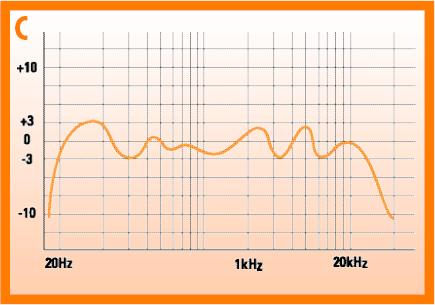
A more familiar analogy to this concept is the frequency response of a stereo speaker. When you speak to a stereophile, you will learn about how the speakers you choose can modify the "highs" and "lows". As sound energy is generated within the speaker, the physical characteristics of the speaker (e.g. speaker cone, the speaker housing, the magnetic coil) all contribute to the dynamic response of the speaker. If there is a vibrational mode (a point in the frequency range that causes the speaker to respond) within the range of hearing, then the dynamic response will be effected. The classic opera singer causing a crystal glass to shatter is a classic example of a vibrational mode going arwy.

Spectroscopy uses the same concept, but with different energy sources, and it measures the vibrational intensities of the chemical bonds that exist within a compound. Carbon-oxygen bounds vibrate at one frequency, Carbon-hydrogen bonds vibrate at another. Consider when compounds made up of a number of different springs, dampers and masses all have a different response to excitation. Now, consider that the compound is a three-dimensional object being measured in a two-dimensional fashion. This leads to a lot of interpretation.

Years ago, spectroscopy was considered an art – where IR spectra were collected bound into books and journals and researchers would pour over the images to see if there were similarities between their experimental data and the reference data collected in the journals. As we moved toward improved systems and accuracy (NMR is highly accurate and discriminatory), the electronics used in spectroscopy offer tools for prediction and identification of spectra based on the libraries contained within the spectrometer’s reach. But, the challenge has been, do you have enough spectra to be able to have an understanding of all potential spectra available?

A vision of a SPECTRAL Universe
While my background in electrical engineering and robotics, when I was a kid, I used to love playing with my chemistry set. I did not know about the concept of spectroscopy, and if I had when doing my PhD work, I might have laughed at how similar it truly is. I used to spend hours causing my robotic arm to vibrate at different frequencies so I could see the output response of the system and create its dynamic response. Being non-linear (linearity properties did not apply for all conditions) and time-variant (if the gears were warmed up after use versus just starting), the system had a reasonable linear response – which I would then characterize and attempt to identify. In spectroscopy, the same concept is used, but being a chemical compound, one is not always certain of the same conditions. The measurement of a compound’s spectra can have a number of sources of variance including:

  • Concentration levels versus contaminants
  • Instrumentation differences (e.g. resolution error)
  • Operator error (student versus a skilled technician)
  • Temperature
  • Humidity
  • ...and on and on...
While these might sound dreadful to come, I have come to think of these measurements as points in a mystery to solve what is the representation of a chemical compound in a particular spectral modality. Instead of a perfect spectra for ethanol, I believe that there are many versions of ethanol that people can measure in a particular modality that can be used to ascertain the “perfect” spectra. Somewhat like Plato’s concept of the “Beautiful” or the “Truth”, the perfect representation is always going to be just out of reach, while we continue to measure and attempt to find it.

Instead of the search for perfection, my belief is that accuracy can be found by the concept of clustering that all of the search engines and datamining companies use on a regular basis.

To bring “clustering” into perspective, think of the universe of spectra being infinitely vast and empty. For our simple discussion here, let us chose a chemical – say, ethanol – which, after being measured by the perfect spectrometer, has a spectra with three values (xe, ye, ze). Also assume that all spectra have a three dimensional point assigned to them (x, y, z). Now, ask a group of scientists (let’s say 50) to measure the spectra of ethanol (same composition, same concentration, everything). When all 50 points were gathered and plotted in the universe, you would see 50 points, primarily clustered around (xe, ye, ze) – which would create a likelihood of any other spectra that falls within that cluster to be ethanol.

This is the basis for my concept of the Spectral Universe.

Now consider that spectra can have over 2000 points or more to represent themselves. This “universe” could conceivably have over 2000 points to help identify in “space” which spectra is what. And, with samples from a large group of people, clusters of spectra would help identify chemical compounds – even ones that are corrupted by any number of variance factors. All by surfing the “spectral universe” to determine the most likely candidate. This was the inspiration of the SPECIAL Project.

The SPECIAL/Red Hen Project
Originally started as a Windows client to search your personal spectral library by Professor John Bove at Cooper Union, the SPECIAL Project evolved into a demonstration of collaboration and open data between chemical spectroscopists and scientists using technology to improve the identification of chemical compounds. Instead of relying on an absolute reference as has been managed by vendors and other providers maintaining a lock on innovation by controlling their intellectual property, the SPECIAL Project is meant as an opening – a marketplace to allow chemists and academics to work together to create a common spectral database and to build upon the platform to improve the capabilities within it.

Instead of relying solely on the innovation cycle of hardware vendors, chemists can develop new ways of evaluating chemical spectra and other chemical data to allow for richer discoveries through the aggregation of many sources of data into a single framework. Similar to what was discussed as .NET and "mashup" APIs, the SPECiAL Framework will allow disparate data sources to work in concert with other applications, once the interface and rules have been designed and developed to enable the protections and interfaces needed for the data source owner.

By respecting the intellectual property rights of the creator of the spectra (just like being the rights owner of any form of digital media like music or movies), the SPECIAL Project is designed to give a framework for database owners a chance to monetize their spectral data in a fashion that allows for per-use offering while also supporting the free exchange of spectral data amoungst members of the community. With an additional focus on interoperability with other software platforms and hardware systems (e.g. spectrometers have their own data storage format), the goal is to create a system that allows for mashups of hardware and software to create more compelling applications using spectroscopy.

When NASA sends off the Mars Scientific Laboratory in 2009, onboard will be a spectrometer the size of today’s Palm treo. Think about the possibilities if you could have your own personal spectrometer for your own evaluation of caloric content. Or for determination of breast cancer without invasive surgery (mammagrams in the privacy of your own home). Or spectral detectors of bomb materials as you walk through the airport security system more reliable than what is offered today.

Am I painting a future of the Star Trek tricorder? I sincerely hope so. But to get there, we have some technology research to do. We are very close. William Shatner - want to do another special on the effects of Star Trek?